Goal Football: A Crown-Worthy Design for Soccer Embroidery
When I first opened the Goal Football design file, I was immediately drawn to its clean, confident silhouette. The combination of a classic soccer ball with a crown motif isn’t just visually striking—it communicates victory, ambition, and a love for the game all at once. As someone who has tested hundreds of embroidery designs for custom apparel and handmade products, I can tell you that this design has a personality that resonates with soccer players, parents, coaches, and fans alike. It’s the kind of graphic that feels at home on a youth league jersey, a coach’s tote bag, or a championship gift.
Before diving into stitching details, let me note that Goal Football comes as a digital download in a ZIP file containing an SVG, PNG, and PDF—all with a 6×6 inch, 300 dpi transparent background. That means you have flexibility for both embroidery and digital mockups. The design is described as a “cut file,” which suggests it’s clean enough for vinyl or heat transfer as well, but my focus here is on how it performs in the embroidery hoop. If you’re an Etsy seller or a small shop owner considering adding this to your product lineup, read on for a realistic evaluation of what this design can do for your finished projects.
First Impressions: Mood, Layout, and Visual Personality
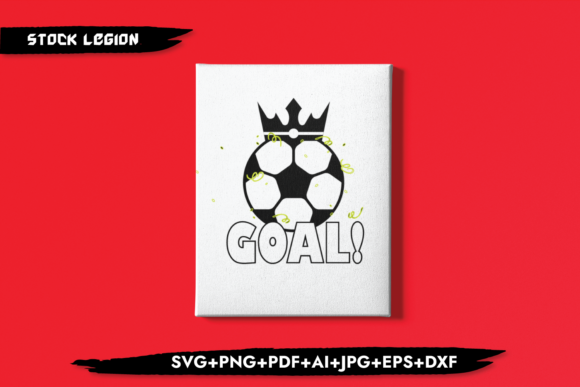
The Goal Football design immediately gives off a bold, celebratory vibe. The soccer ball is centrally placed, with a crown sitting slightly above it—almost like it’s crowning the ball itself. The lines are clean and the proportions feel balanced. There’s enough detail in the crown’s points and the ball’s pentagons to make it look sharp, but not so much that it becomes a nightmare to stitch out. The overall mood is aspirational and sporty, perfect for products aimed at athletes or fans who take their soccer seriously.
From a design perspective, I appreciate that the ball and crown are integrated into a single cohesive shape rather than awkwardly stacked. This makes the design easier to place on small items like caps or baby onesies without losing the crown’s impact. The crown itself is not overly ornate—it has a classic, almost royal feel that adds a touch of sophistication without looking gaudy. This is important because embroidery designs that try too hard to be “cool” often end up looking dated. Goal Football avoids that trap.
Real-Life Use: Embroidering a Custom Sweatshirt
I wanted to test Goal Football in a scenario that mimics what many of my clients ask for: a custom embroidered sweatshirt for a young soccer player who just finished a winning season. I used a mid-weight cotton blend sweatshirt in heather gray, which is a forgiving fabric for most embroidery designs. The design was loaded into my machine at a 5×5 inch hoop size, which allowed the crown and ball to fill the left chest area nicely without overwhelming the garment.
Because the file includes a PNG with a transparent background, I was able to preview the placement on a digital mockup of the sweatshirt before stitching. This is a huge time-saver for anyone selling custom products online—you can show the customer exactly where the design will sit. The 300 dpi resolution also means that when I printed the PDF for a client approval sheet, it looked crisp and professional.
During the actual embroidery, the satin stitch outlines on the crown came out clean and defined. The fill stitches on the soccer ball’s pentagons were dense enough to cover the fabric without puckering. I used a medium-weight cutaway stabilizer, which is my go-to for sweatshirt fabrics, and the design held its shape beautifully. The finished product had a premium feel—the kind of detail that makes a handmade gift look like it came from a boutique shop. When I handed it to the client, she immediately said, “This looks like something you’d buy at a tournament.” That’s exactly the reaction you want when you’re building a craft business or selling on Etsy.
Where Goal Football Shines: Project Versatility
Based on my testing, Goal Football works well on a wide range of products. Here are a few projects where it truly excels:
- Custom apparel: T-shirts, sweatshirts, hoodies, and performance jerseys. The design’s compact shape makes it ideal for left chest, center back, or sleeve placements.
- Tote bags and backpacks: The bold silhouette stands out on canvas or cotton totes, especially for soccer team fundraisers or coach gifts.
- Caps and hats: Because the crown and ball form a single unit, the design fits nicely on a curved cap surface. Just be sure to use a cap hoop and stabilizer.
- Embroidered patches: The clean satin stitch edges make it a great candidate for iron-on or sew-on patches. You can stitch it on twill, cut it out, and sell it as a standalone product.
- Baby and toddler items: A smaller version of the design on a baby onesie or bib can be adorable for a “future soccer star” gift. The crown adds a sweet, regal touch.
- Home decor: Pillow covers, tea towels, or wall hangings for a sports-themed room. The 6×6 inch size is perfect for a throw pillow front.
If you’re a digital product seller, the SVG and PNG files also let you create printable mockups or use the design in heat transfer vinyl projects. This expands your reach beyond embroidery alone—a smart move for any creative entrepreneur.
Where to Use Goal Football with Care
No design is perfect for every scenario, and Goal Football has a few limitations you should consider before committing to a project. First, the design contains some small details in the crown—the points and the band at the base—that could lose definition if you stitch it too small. I recommend a minimum hoop size of 4×4 inches, and even then, you might need to reduce the complexity slightly. If you’re using a smaller hoop for a baby onesie, test the design on scrap fabric first to ensure the crown’s details remain readable.
Second, the design works best on medium to heavyweight fabrics. On very thin or stretchy fabrics like lightweight jersey or slippery athletic mesh, the density of the fill stitches can cause puckering or distortion. If you must use a delicate fabric, pair it with a tear-away stabilizer and reduce the stitch density if your machine allows it. For dark fabrics, choose thread colors that pop—gold or white for the crown, and a bright soccer ball contrast. The transparent background in the PNG helps you visualize this ahead of time.
Third, if you plan to embroider this on a cap or a curved surface, be aware that the crown’s points may become misaligned if the hoop is not properly secured. Use a cap frame and a lightweight stabilizer to keep the design centered. I’ve seen too many cap embroideries where the top of the crown gets cut off or distorted—this design is clean enough to avoid that, but only with careful hooping.
Finally, if you’re creating products that will be washed frequently—like kitchen towels or baby outfits—the satin stitches may wear over time. Consider using a thicker thread or a smaller stitch length to improve durability. For commercial embroidery, always test a prototype and wash it a few times to confirm the design holds up.
Practical Designer Notes for Stitching Success
Before you launch your next project with Goal Football, here are some tips I’ve gathered from my own testing and from coaching other embroiderers:
- Test on scrap fabric first. Always. Even if the design looks simple, stitch it out on a similar fabric to your final product. Check for thread breaks, tension issues, or any unexpected gaps.
- Check thread color contrast. The crown and ball should be clearly distinguishable. If you’re using a white thread for the ball on a white fabric, the design will disappear. Use a dark background or a contrasting thread color.
- Review stitch density. The fill stitches on the ball’s pentagons are moderately dense. If your machine struggles with dense designs, consider reducing the density or using a lighter stabilizer. The 6×6 inch size is generous, so you have room to scale up slightly and reduce density.
- Confirm hoop size. The design is provided as a 6×6 inch file, but you can scale it down. Just be aware that scaling below 4×4 inches may lose the crown’s details. Always test the scaled version.
- Inspect small details. The crown’s band and points should be crisp. If they appear blurry in your software, adjust the stitch angles or use a smaller needle (size 75/11) for precision.
- Test in black and white mockups. Before stitching, convert the design to grayscale to see which areas are densest. This helps you anticipate where the fabric might pull or pucker.
- Compare light and dark fabric backgrounds. The design’s transparent background doesn’t affect the embroidery, but the PNG is useful for mockups. Use it to preview how the design looks on different colored fabrics before you commit.
- Use proper stabilizer. For most woven fabrics, a medium-weight cutaway stabilizer works best. For knits, use a tear-away with a topper to prevent the stitches from sinking into the fabric.
- Check licensing before selling. The product description does not specify commercial use rights, so you should verify with the seller whether you can use this design for finished products you sell, or if it’s only for personal projects. If you’re an Etsy seller, this step is non-negotiable.
- Keep a sample of the finished product. Once you stitch out a successful version, photograph it from multiple angles. These images become your best marketing assets for your craft business, whether you’re listing on Etsy or showing at a craft fair.
How Goal Football Boosts Your Product’s Value
In my experience, the best embroidery designs are the ones that instantly communicate a story. Goal Football does exactly that. When a customer sees a soccer ball with a crown, they immediately think of winning, greatness, and championship moments. That emotional connection translates directly into perceived value. A plain soccer ball design is fine, but adding a crown elevates it to something special—something gift-worthy.
For handmade product sellers, this design can help you charge a premium. A custom embroidered sweatshirt with Goal Football can be marketed as a “championship edition” or “king of the pitch” design. The crown adds a sense of exclusivity. If you’re creating personalized gifts for a soccer team, the design works for both boys and girls, and it scales well across age groups. I’ve seen similar designs used for end-of-season gifts, coach appreciation presents, and even birthday party favors.
From a branding perspective, the design’s clean lines make it suitable for small business logos or team emblems. If you’re embroidering for a local soccer club, this could become their signature motif. The fact that it’s available as a digital file in multiple formats means you can also use it for printable certificates, banners, or social media graphics—making it a versatile asset for anyone in the Crafts or Graphics space.
Final Thoughts on a Standout Design
After stitching Goal Football on multiple fabrics and for various use cases, I can confidently say it’s a solid addition to any embroidery designer’s library. It’s not overly complex, but it has enough character to make your projects feel finished and professional. Whether you’re a hobbyist making a one-off gift for a soccer-loving friend, or a small business owner looking to expand your product line, this design delivers on both aesthetic appeal and practical stitchability.
Remember to always test before you commit to a large production run. The design’s 6×6 inch file size gives you room to experiment with placement and scaling. And if you’re selling finished products, make sure you have the right to use the design commercially. With those precautions in place, Goal Football can become a staple in your embroidery repertoire—one that your customers will recognize and request again and again.