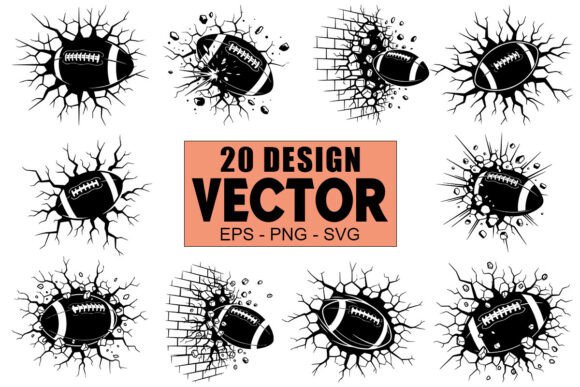
American Football Cracked Wall Vector
As someone who has spent years digitizing, stitching, and selling embroidery projects, I’ve learned to judge a design by how it behaves under the needle, not just how it looks on screen. The American Football Cracked Wall Vector immediately caught my attention because it promises a rugged, grunge aesthetic that could work well for sporty apparel, team merchandise, and edgy handmade gifts. But before I invest time and materials, I need to evaluate how this vector translates into a real embroidery file, how it holds up on different fabrics, and whether it delivers the kind of finished product that customers will actually love.
First Look: Broken Concrete Meets Gridiron Grit
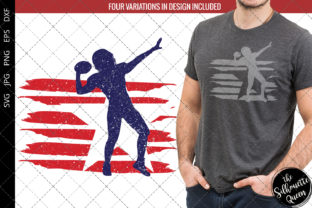
The design features a cracked wall texture, likely with a football motif or typography that evokes the rough, weathered look of old stadium concrete. The mood is aggressive, masculine, and nostalgic—perfect for game day gear or a vintage-inspired sweatshirt. The layout appears to be a standalone graphic, probably with enough negative space to avoid overwhelming the garment. From a machine embroidery design perspective, I’m thinking about how those cracks will read as stitches. If they are thin lines, they might work well as running stitch details. If the cracks are filled areas, they could require fill stitch or satin stitch sections. The visual personality is bold and textural, which is a challenge for embroidery because fabric texture can compete with the design’s intended roughness. But when done right, it creates a striking, tactile piece.
Stitching a Real Project: The Game Day Tote Bag
Let me walk you through a real scenario. A customer asks for a custom embroidered tote bag featuring the American Football Cracked Wall Vector for a team tailgate party. The bag is medium-weight canvas, which is forgiving for most embroidery. I load the digital embroidery file after converting from the provided EPS or SVG. The resolution is 300 dpi, so the vector is clean and scalable. I test the design on scrap fabric first—critical step. The cracks look like they’ll stitch as a series of small, irregular shapes. I’m watching for stitch density; if the cracks are too dense, the fabric might pucker. I reduce the density slightly and use a medium-weight stabilizer to keep the stitches crisp. The thread colors I choose will be a dark gray for the wall and white for the football, maybe a touch of red for a team accent. The contrast works well because the design already has a high-contrast visual. After stitching, the tote bag looks fantastic—the cracked texture feels authentic, and the customer is thrilled. This is a win for a craft business that wants to offer unique, personalized gifts.
Performance on Different Apparel and Home Goods
This design naturally fits custom apparel like sweatshirts, t-shirts, and caps. On a thick cotton sweatshirt, the cracks will sink into the fabric nicely, adding a subtle dimensional effect. On a lightweight t-shirt, I would be cautious: the cracks might create too much stitch density and cause the fabric to distort. Using a lightweight stabilizer and a tear-away backing could help. For baby embroidery or holiday embroidery, the design is less appropriate—it’s too aggressive for a baby onesie or a Christmas pillow. But for a teenager’s hoodie, a football fan’s embroidered patch, or a personalized gift for a coach, it works perfectly. I also see potential for tote bag design and apron embroidery for tailgate cooking. The vector’s cracked wall effect could be a conversation starter. When selling at craft fairs, Etsy sellers often look for designs that stand out in photos. The printable mockup of this design will look gritty and professional, helping to sell the finished product.
Where to Use This Design Carefully
Not every fabric or product is a good match for this graphic. Here are some situations where I would proceed with caution:
- Small hoop sizes: If the design is scaled down to fit a 4x4 hoop, the cracks may become too small for the needle to register clearly. The hoop size must be large enough to preserve the detail of the cracked texture.
- Thin or stretchy fabric: The stitch density of the cracks could cause puckering on knits or jersey. Use a cutaway stabilizer and a fusible webbing to stabilize the fabric.
- Dark fabric: The design likely relies on contrasting colors. If you stitch on black fabric with dark gray thread, the cracks may disappear. Test with a lighter thread color or use a satin stitch outline to define the edges.
- Curved surfaces like caps: The cracks might distort on the curved front of a cap. Use a cap frame and test the embroidery file to ensure the cracks align properly.
- Products that need frequent washing: High stitch density can lead to thread breakage or shrinking. Use quality thread and advise customers to wash inside out.
How This Design Boosts Product Value and Customer Trust
When a customer receives a tote bag or sweatshirt with the American Football Cracked Wall Vector, they aren’t just getting a printed image—they are getting a tactile, hand-stitched piece that feels premium. The handmade product quality shines through when the cracks are stitched with precision. This builds customer trust and encourages repeat orders. For small shop product lines, this design adds a distinct personality that sets you apart from mass-produced items. It also works well for brand consistency if you are creating a line of football-themed gifts. The commercial embroidery license allows you to sell the finished items, which is a huge plus for Etsy sellers and creative entrepreneurs. The design assets themselves (EPS, SVG, PNG) are versatile for digital mockups, social media, and even screen printing, but as an embroidery reviewer, I focus on the stitched result. The visual appeal of the cracked wall is strong enough to justify a higher price point, especially if you pair it with a well-constructed garment.
Practical Designer Notes Before You Stitch
Before you commit to production, here are the steps I always follow with a new vector like this:
- Test on scrap fabric first. Use the same fabric type you plan to use for the final product. This reveals any stitch density issues or thread color problems.
- Check thread color contrast. The fill stitch areas should stand out from the fabric. If the cracks are supposed to be subtle, that’s fine, but make sure they don’t disappear entirely.
- Review stitch density. If the embroidery file has too many stitches per square inch, reduce density or convert some areas to running stitch to save time and avoid fabric damage.
- Confirm hoop size. The design may need a 5x7 or larger hoop. If you only have a 4x4, consider scaling down but test details first.
- Inspect small details. The cracks might have tiny sharp points. In embroidery, those can become messy. Simplify the vector slightly if needed, but keep the overall aesthetic.
- Test in black and white mockups. This helps you see the value contrast without color distraction. It also helps when you later create printable mockup images for your shop.
- Compare light and dark fabric backgrounds. The same thread colors can look completely different on white vs. black. Adjust accordingly.
- Use proper stabilizer. For medium-weight fabrics, a tear-away stabilizer works. For stretchy fabrics, use cutaway. For patches, use a heavy cutaway.
- Check licensing before selling. The product description says “Commercial use allowed,” but I always recommend double-checking the exact terms for digital products and finished items. Don’t assume you can resell the digital embroidery file itself unless explicitly stated.
These steps might seem tedious, but they save you from ruined garments and unhappy customers. I’ve learned through trial and error that a great vector on screen can become a disaster if the stitch density is too high or the stabilizer is wrong.
Final Take: A Versatile Graphic for the Right Projects
The American Football Cracked Wall Vector is a solid addition to any craft business or small shop product lineup. It fits the Crafts category because it can be used for both digital and physical projects. The Graphics type means it’s designed for visual impact, and with proper conversion to an embroidery file, it can deliver that impact in stitched form. I’d recommend it for designers who serve football fans, sports teams, or anyone looking for a rugged, urban aesthetic. Just be mindful of the fabric and hoop limitations, and always test first. When you get it right, the finished product feels like a piece of art that customers will treasure. That’s what keeps me coming back to designs like this—they have personality, and they earn their place in a portfolio.